



- How To Watch The Saints Game: New Orleans Vs. Minnesota Vikings: Stream, TV, Radio Options - October 10, 2026
- Best Étouffée In New Orleans: 7 Restaurants That Don’t Miss - October 10, 2026
- New Orleans Saints 2026 Schedule: Dates, Times, Opponents, Scores - October 10, 2026
As the holiday lights twinkle a little brighter along Magazine Street and the scent of fresh king cake wafts from every corner bakery, New Orleanians know it’s time to turn our gaze toward the season that puts our city on the map: Mardi Gras. With 2026 upon us, the Crescent City’s streets are already buzzing with anticipation for a Carnival extravaganza that’s equal parts tradition, spectacle, and unbridled joy.
From the first rollicking streetcar parades to the glittering floats of Fat Tuesday, Mardi Gras isn’t just an event—it’s the heartbeat of New Orleans, featuring plenty of good food that the city is known for.
Whether you’re a lifelong local plotting your ladder spots or a visitor dreaming of beads and brass bands, here’s everything you need to know to dive into the madness of Mardi Gras 2026.
This article will tell you everything you need to know about Mardi Gras 2025 in New Orleans.
Mardi Gras: Everything You Need To Know
One of the highlights of Mardi Gras in New Orleans is the elaborate parades organized by various krewes (social organizations). Read our guide on the parade routes.
Each parade features colorful floats, marching bands, and costumed riders throwing beads, toys, and other trinkets to the crowd. Some of the most popular parades include those organized by the Krewe of Endymion, Krewe of Bacchus, and Krewe of Zulu.
When Is Mardi Gras 2026?
Mark your calendars, krewe captains and parade chasers: The 2026 Carnival season kicks off on Twelfth Night, Saturday, January 6, with the ceremonial arrival of the baby Jesus on the king cake and the first waves of costumed revelers hitting the streets.
It all builds to a fever pitch on Fat Tuesday, February 17, when the city shuts down for parades, parties, and that one last indulgence before Lent begins.
Unlike fixed holidays, Mardi Gras dances to the rhythm of the ecclesiastical calendar, always falling 47 days before Easter (which lands on April 5 in 2026).
That means six weeks of escalating festivities: early walking krewes in the Marigny and French Quarter, family-friendly daytime parades Uptown, and the blockbuster nighttime spectacles that light up St. Charles Avenue like a river of gold doubloons.
Expect school closures, street sweeping crews on overtime, and that familiar crunch of confetti underfoot from mid-January onward. Pro tip: Download the official Mardi Gras app now to track routes and avoid missing your favorite throws.
How Long Is Mardi Gras 2026?
Mardi Gras in New Orleans lasts for several weeks, with the culmination on Fat Tuesday, which is the day before Ash Wednesday. The entire period leading up to Fat Tuesday is filled with parades, parties, and celebrations, often referred to as the Mardi Gras season or Carnival season. The exact duration can vary slightly from year to year, but it usually spans from early January to the day before Ash Wednesday.
The date shifts annually because it’s tied to Easter, which falls on the first Sunday after the first full moon following the spring equinox—47 days later, you get Mardi Gras. In 2025, Easter is April 20, making March 4 the big day.
Festivities, especially in places like New Orleans, ramp up in the weeks leading up to it, with major parades often scheduled in late February and early March. Enjoy the beads, king cake, and chaos!
King cakes are a traditional Mardi Gras dessert in New Orleans. These oval-shaped cakes are decorated in the colors of Mardi Gras (purple, green, and gold) and often contain a hidden plastic baby figurine. According to tradition, whoever finds the baby in their slice of cake is responsible for hosting the next party or providing the next king cake.
When Should You Go To New Orleans For Mardi Gras?
Because of the high cost of hotels, it makes sense to book a hotel the weekend before Fat Tuesday. That’s when the majority of visitors come to the city and it’s also when some of the largest parades take place.
Book an affordable hotel in New Orleans.
What Happens At Mardi Gras In New Orleans?
Mardi Gras in New Orleans is more than just watching parades and throwing beads from a hotel balcony. The event is a celebration of the city’s culture.
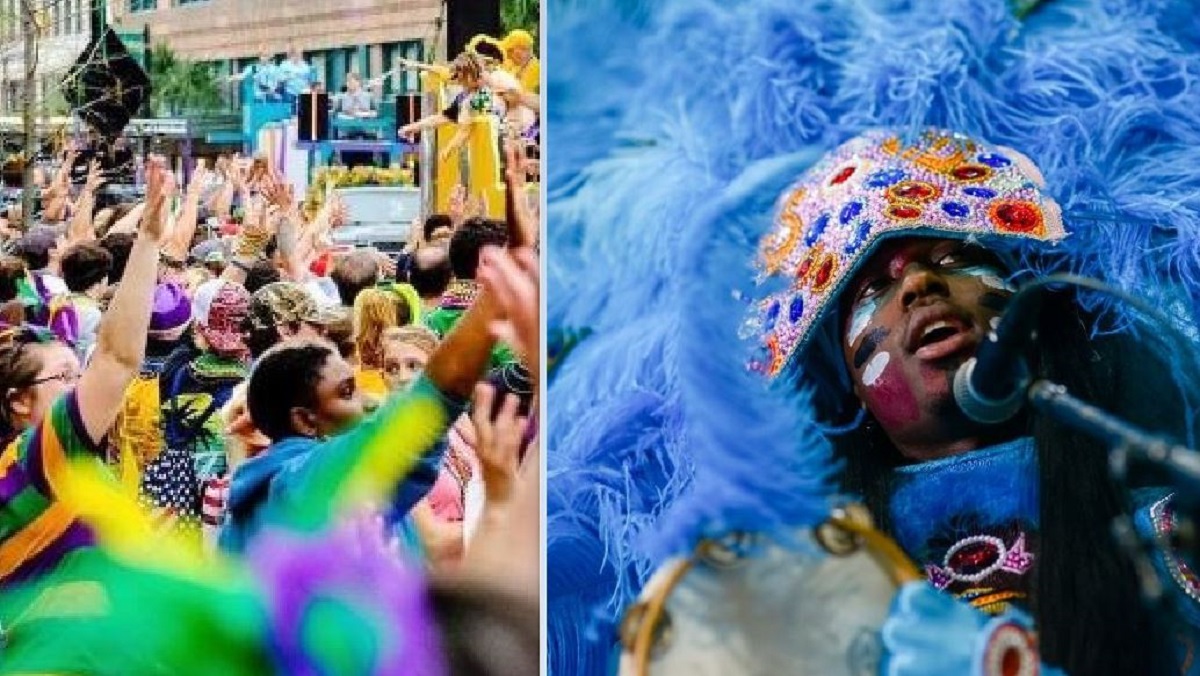
You’ll see participants usually dressed in some combination of green, gold and purple along with an assortment of beads. There are also colorful floats that represent many of the city’s krewes, or social clubs.
Along with the parades and music, there will be second-line bands and plenty of parades.
: The French Quarter is the heart of the Mardi Gras festivities in New Orleans. The streets are filled with music, dancing, and revelry, and many bars and restaurants host special events and parties during this time
Why Do They Throw Beads In New Orleans?
You might be intrigued to know why people throw beads in New Orleans. Lore has it that the practice can be traced to early religious festivals that ushered in the tradition of the lent season.
In modern times, the beads have come to symbolize a hospitable gesture that parade participants engage in to reward the crowds.
What Is the History of Mardi Gras in New Orleans?
The first American whisper of Mardi Gras echoed on March 3, 1699, when French explorer Jean-Baptiste Le Moyne, Sieur d’Iberville, and his crew celebrated near the mouth of the Mississippi—about 60 miles south of what would become New Orleans—naming the spot “Pointe du Mardi Gras.”
history.com Fast-forward to 1718, when Iberville’s brother Bienville founded La Nouvelle-Orléans, and by the 1730s, masked balls and street processions were already testing the patience of Spanish governors. But the modern blueprint?
That arrived in 1857, courtesy of the secretive Mistick Krewe of Comus—a band of bon ton businessmen—who lit torches, mustered brass bands, and rolled out illuminated floats for the first organized parade, blending European pomp with Southern flair.
Over the decades, Mardi Gras absorbed waves of influence: Creole elegance from Rex’s royal court, African American ingenuity in Zulu’s coconut throws and the Black Masking Indians’ beaded suits, and feminist fire from all-women krewes like Muses.
Today, it’s a multicultural mosaic—part Catholic rite, part street theater—that draws over a million souls to our streets each year. As we gear up for 2026, it’s a reminder: In New Orleans, history doesn’t just linger; it parades right past your front porch.
How To Attend A Mardi Gras Parade
There will be several parades throughout the city for Mardi Gras. The best place to see the parade routes is here.
Final Word
If you plan on visiting the city for New Orleans, you should know that the area you’re staying in is safe.
Mardi Gras can be a crowded and chaotic event, so it’s important to stay aware of your surroundings and follow basic safety precautions. Be respectful of other revelers and local residents, and remember that public intoxication and nudity are not tolerated.
Expect to indulge in many foods that New Orleans is known For, including Gumbo, Beignets and more.
Read about things to see and do in New Orleans.
More From NolaFi.com:





[…] you’re headed to New Orleans for Mardi Gras or another festive event, you should educate yourself on many things, crime, included. But, again, […]
That means you’ll perceive some stylish features and press access to additional channels where you can gain visibility, without having to designate nous of some confused, guide migration process. https://googlec5.com
[…] you’re the partying type, Mardi Gras is a feast of the senses. New Orleans’ largest party happens every year and culminates on Fat […]
[…] venues that offer live bands, vocalists performing across several genres. And of course, you can check out all the Mardi Gras festivities. There are seedy joints, upscale big band-type options as well as restaurants, taverns and banquet […]
[…] delicious in New Orleans! If there’s one thing that gets Louisianians fired up more than Mardi Gras, it’s almost crawfish […]