

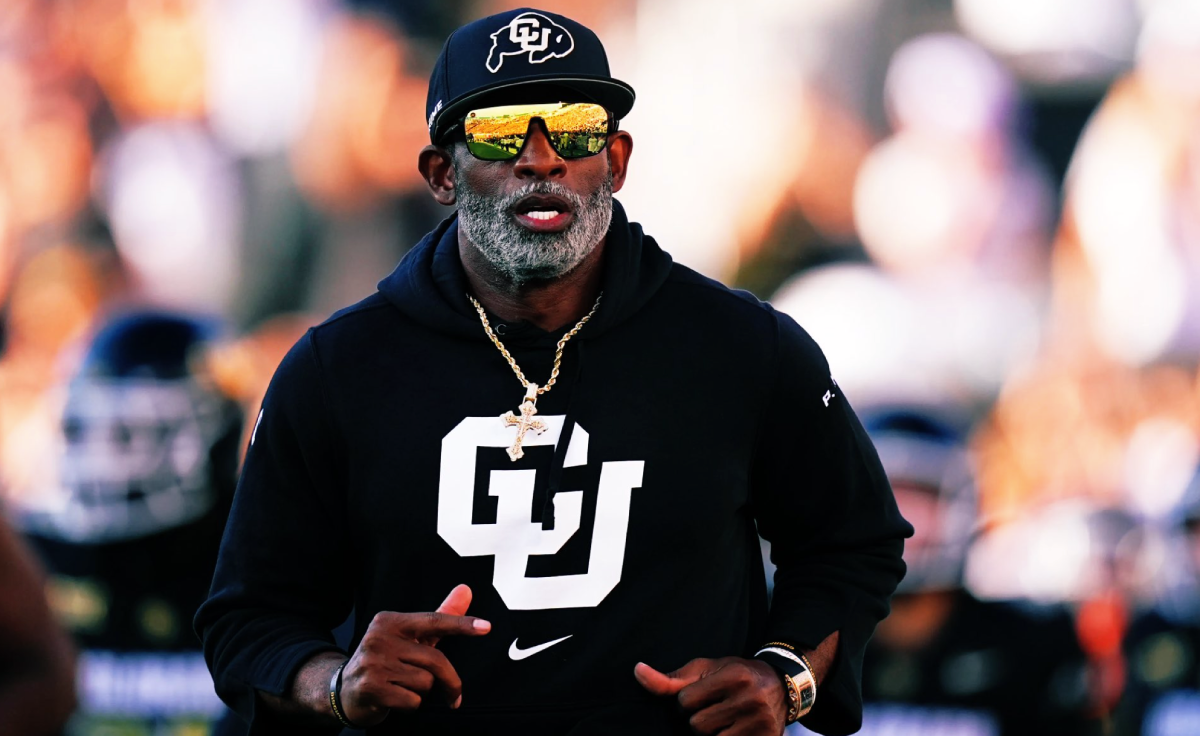


The influx of former NFL players into coaching roles at Historically Black Colleges and Universities (HBCUs) has been a transformative trend in college football, particularly since Deion Sanders’ hiring at Jackson State in 2020.
This “Coach Prime Effect” has elevated HBCU programs by blending celebrity appeal with professional expertise, leading to measurable gains in visibility, recruitment, attendance, and funding. However, it also raises questions about long-term sustainability, player retention, and whether HBCUs serve as stepping stones to predominantly white institutions (PWIs).
As of December 2025, nearly half of Division I HBCU head coaches have NFL playing experience, contributing to a seismic shift in the landscape.
Black Head Coaches in NCAA Football
| Name | Team | Notes |
|---|---|---|
| Deion Sanders | Colorado Buffaloes | Power 4 program; hired in 2023. |
| Eddie George | Bowling Green Falcons | Moved from Tennessee State in 2025. |
| Michael Vick | Norfolk State Spartans | Hired in December 2024. |
| DeSean Jackson | Delaware State Hornets | Hired in December 2024. |
| Terrell Buckley | Mississippi Valley State Delta Devils | First season as head coach in 2025. |
| Terance Mathis | Morehouse Maroon Tigers | Ongoing tenure at HBCU. |
| T.C. Taylor | Jackson State Tigers | Entered 2025 with national championship from 2024. |
| Raymond Woodie Jr. | Bethune-Cookman Wildcats | Since 2023. |
| Alonzo Hampton | Arkansas-Pine Bluff Golden Lions | Since 2023. |
| Sam Shade | Alabama A&M Bulldogs | Moved from Miles College in 2022. |
| Cris Dishman | Texas Southern Tigers | 6-5 record in 2025, first winning season in 25 years. |
| Eddie Robinson Jr. | Alabama State Hornets | 9-2 record in 2025. |
Assistant Coaches
| Name | Team | Position | Notes |
|---|---|---|---|
| Marshall Faulk | Colorado Buffaloes | Running Backs Coach | Hired in 2025 under Sanders. |
| Jason Taylor | Miami Hurricanes | Defensive Ends Coach | Defensive line specialist. |
| DeMarco Murray | Oklahoma Sooners | Running Backs Coach | Focuses on NFL pipeline development. |
| Hines Ward | Arizona State Sun Devils | Wide Receivers Coach | Brings Super Bowl experience. |
| C.J. Spiller | Clemson Tigers | Running Backs Coach | Long-term Clemson staff member. |
| Warren Sapp | Colorado Buffaloes | Defensive Line Coach | Part of Sanders’ NFL-heavy staff in 2025. |
| Byron Leftwich | Colorado Buffaloes | Offensive Coordinator | Added to staff in 2025. |
This list focuses on prominent examples as of November 2025, drawing from recent hires and ongoing tenures, primarily at HBCUs and Power 4 programs. Many of these coaches were hired without prior college experience, reflecting a trend influenced by Deion Sanders’ success.
Positive Impacts
Former NFL coaches have revitalized HBCU football in several key areas:
- Increased Visibility and Media Exposure: Sanders’ tenure at Jackson State generated an estimated $185 million in advertising and exposure revenue in under a year, putting HBCUs on national stages like ESPN broadcasts. This “seismic shift” has continued with hires like Michael Vick (Norfolk State) and DeSean Jackson (Delaware State), drawing headlines and social media buzz that amplify HBCU stories beyond niche audiences.
- Enhanced Recruitment and Talent Pipeline: These coaches leverage NFL networks to attract top prospects. Sanders recruited No. 1 high school player Travis Hunter and achieved a 38-17 record at Jackson State. Eddie George led Tennessee State to a 9-3 season and shared Big South/OVC title in 2024. Overall, HBCU football has seen a surge in highly ranked recruits, with programs like Norfolk State and Delaware State poised for similar boosts in 2025.
- Financial and Attendance Gains: Celebrity hires correlate with sold-out games, sponsorships, and economic ripple effects. Colorado’s “Prime Effect” (post-Jackson State) included $72.1 million in direct economic impact from events, a model echoed at HBCUs. Programs report higher ticket sales and donor interest, addressing chronic underfunding—HBCU football budgets often hover below $5 million, compared to $30+ million at Power 5 schools.
- Player Development and NFL Opportunities: Coaches like Doug Williams (Grambling State) and Cris Dishman (Texas Southern, 6-5 in 2025) emphasize holistic growth, including academics (“God, Grades, & Wins”). NFL initiatives like the HBCU Legacy Bowl and Combine, supported by alumni like Williams, have drafted over 70 HBCU players since 2000. In 2025, hires like Marshall Faulk (Southern University) and Terrell Buckley (Mississippi Valley State) aim to strengthen this pipeline.
- Cultural and Inspirational Legacy: These coaches inspire Black youth, reinforcing HBCUs’ role in producing legends like Jerry Rice and Walter Payton. The NFL’s “Strength of HBCUs” partnership since 2016 has engaged over 4,000 students in workshops and internships, fostering generational impact.
| Key Positive Metrics (Examples from Recent Seasons) |
|---|
| Program |
| Jackson State (2020-22) |
| Tennessee State (2024) |
| Texas Southern (2025) |
| Alabama State (2025) |
| Norfolk State (2025 hire) |
Challenges and CriticismsWhile the trend is largely celebrated, it has sparked debates among HBCU stakeholders:
- Stepping-Stone Concerns: Successful coaches often depart for PWIs, as Sanders did for Colorado in 2022, leaving programs in flux. Of 21 Division I HBCU programs, 16 changed head coaches since 2022, accelerating turnover. Critics argue HBCUs become “surrogate saviors” or launchpads, with limited resources to retain talent amid Power 5 poaching.
- Player Transfers and Loyalty: Sanders’ exit included six Jackson State players (including his son Shedeur) transferring to Colorado, undermining HBCU retention. This mirrors historical talent drains post-integration, where HBCUs lost 53-70 draftees annually (1968-76) to now just 70 total since 2000.
- Cultural Appropriation and Retention Risks: Sanders’ “HBCU-like” elements at Colorado (e.g., soul food events) have drawn backlash for diluting authentic HBCU culture at PWIs, where Black enrollment is under 3%. HBCU veterans like North Carolina Central’s Trei Oliver note exposure benefits but stress giving chances to lesser-known coaches who’ve “put in the time.”
- Sustainability Questions: High-profile hires like Ed Reed’s short Bethune-Cookman stint highlight risks of inexperience. With budgets strained, failure could exacerbate instability, though successes like T.C. Taylor’s 2024 Jackson State championship show potential.
Broader NFL-HBCU Synergies
The NFL actively supports this ecosystem through programs like the Pioli Family Fund for HBCU coaches, honoring figures like Joseph Rankin (Morgan State alum, now at Central Connecticut).
Players like Tyreek Hill and Tre Boston have expressed 2025 interest in HBCU roles, signaling sustained momentum. As one analyst noted, this “evolving carousel” could redefine HBCU football, provided it prioritizes long-term investment over celebrity.
Final Word
In summary, NFL coaches have injected vitality into HBCUs, boosting competitiveness and pride, but equitable retention strategies are essential for enduring change. This trend underscores HBCUs’ enduring legacy in American sports, from segregation-era pipelines to modern revival.





Feminism in sports: empower women without exploiting them. Lesson from cheating saga.