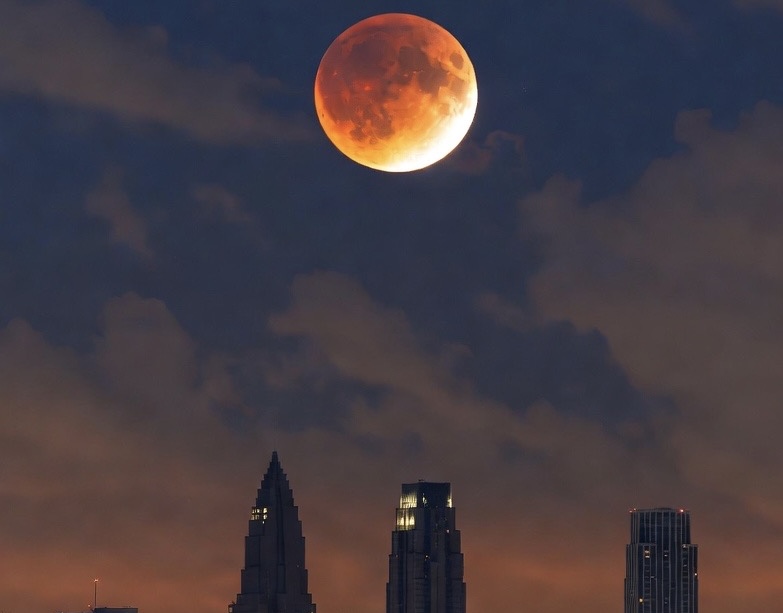


New Orleans, LA (March 1, 2026) – Mark your calendars and set those alarms, Crescent City! A stunning “blood moon” total lunar eclipse will light up the predawn skies on Tuesday, March 3, 2026 — the only total lunar eclipse visible from North America this year and the last one most of us will see until late 2028.
The full Moon (sometimes called the Worm Moon in March) will slip into Earth’s shadow, turning a dramatic copper-red for nearly an hour.
New Orleans Skywatchers Gear Up for Rare Total Lunar Eclipse
No special equipment or eclipse glasses needed — just clear skies and a good view to the west. And here in New Orleans, we’re perfectly positioned to catch the heart of the show before the Moon dips below the horizon.
Why Does the Moon Turn Blood-Red?
During totality, sunlight bends through Earth’s atmosphere and scatters onto the Moon — the same reason sunsets glow orange and red. The deeper the eclipse, the richer the color. It’s completely safe to watch with the naked eye, binoculars, or a camera.
Exact Times to Watch in New Orleans (Central Standard Time)
The eclipse unfolds overnight from Monday, March 2, into early Tuesday, March 3. Here’s the local timeline:
- 2:44 a.m. — Penumbral eclipse begins (subtle darkening starts)
- 3:50 a.m. — Partial eclipse begins (the “bite” appears)
- 5:04 a.m. — Totality begins — the Moon turns fully red!
- 5:33 a.m. — Maximum eclipse (deepest, richest red color)
- 6:02 a.m. — Totality ends
- ~6:26 a.m. — Moonset
Sunrise is right around 6:24 a.m., which means lucky viewers may catch a rare selenelion — the blood-red Moon setting in the west while the Sun rises in the east, both visible at the same time!
The Moon will be fairly low in the western sky during the total phase (dropping from about 17° to just 4° altitude), so a clear, unobstructed western horizon is key.
Best Places to Watch in New Orleans
Head to any open spot with a clear view west:
- Mississippi River levee or riverfront (French Quarter to Audubon Park)
- City Park or Audubon Park open fields
- Lakeshore Drive or your own rooftop/backyard if the view is clear
Pro tip: Arrive by 4:30 a.m. to catch the partial phases and settle in with coffee or beignets. Dress warm — early March mornings can be chilly!
Photography & Viewing Tips
- Naked eye is best for the full experience.
- Binoculars or a small telescope will reveal beautiful details.
- For photos: Use a tripod, wide-angle lens, and exposures of several seconds during totality.
- Weather looks iffy with possible broken clouds — check your favorite forecast app before heading out.
Where Else Is It Visible?
The full eclipse will be seen across much of North America, the Pacific, Australia, and East Asia. Western states get the entire show high overhead; here on the Gulf Coast we get a front-row seat to the dramatic finale as the Moon sets.
This is truly a once-in-a-few-years event for most of us. Don’t miss your chance to see the Moon turn blood-red right over New Orleans!
Share your photos and videos with us at NOLA News — tag us or email cjohnson@nolafi.com. We’ll feature the best shots from around the city.
Clear skies and happy eclipse watching, New Orleans!