

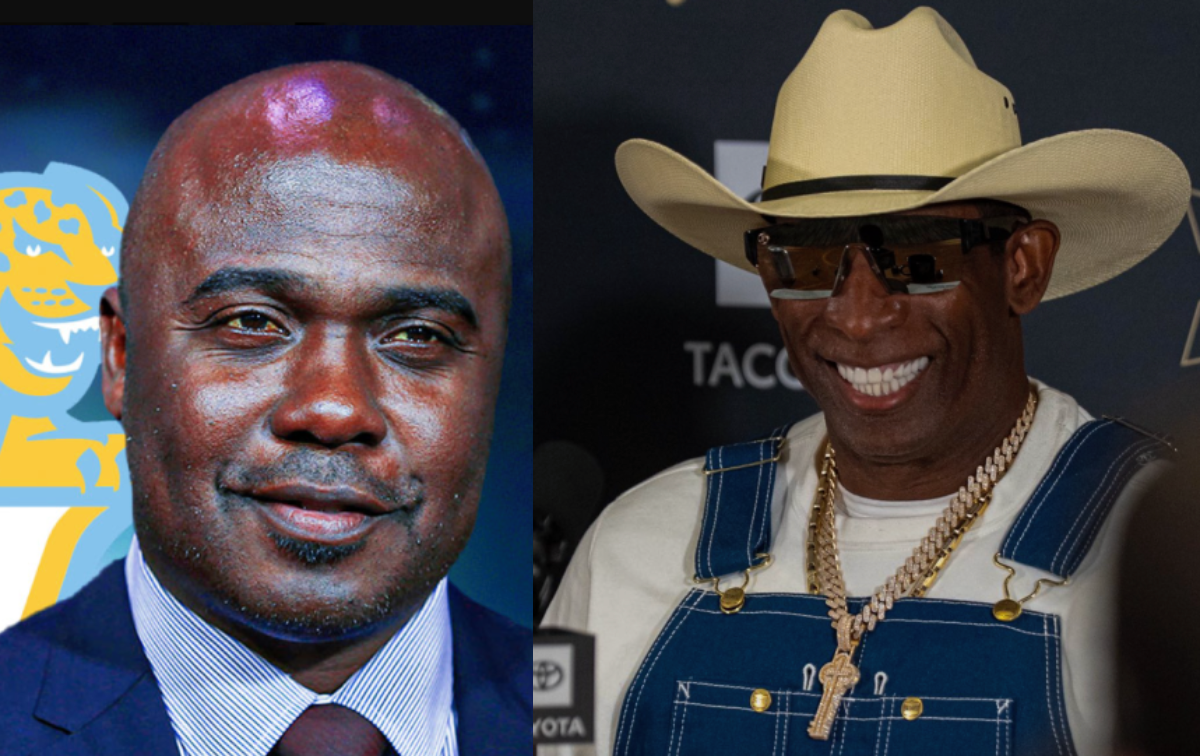


BATON ROUGE, La. — Deion Sanders, the electrifying NFL Hall of Famer known as “Prime Time,” didn’t just coach football at Jackson State University—he ignited a movement.
From 2020 to 2022, Sanders’ tenure at the historically Black college (HBCU) in Mississippi wasn’t merely about wins and losses; it was a seismic shift that elevated HBCU athletics, drawing unprecedented national attention, boosting recruiting, and challenging long-held perceptions of Black college sports.
As Southern University and other HBCUs continue to navigate their own paths in the Southwestern Athletic Conference (SWAC), including Southern’s recent hiring of Colorado coach and New Orleans native Marshall Faulk, Sanders’ blueprint remains a beacon, proving that star power and strategic vision can level the playing field.
Sanders: A Blue Print

Sanders arrived at Jackson State amid the chaos of the COVID-19 pandemic, accepting a modest $300,000 annual salary—peanuts compared to his NFL earnings but a bold bet on his ability to transform a program with a proud history yet limited resources.
What followed was nothing short of revolutionary. In a shortened 2020 spring season, the Tigers went 4-0. The next year, they roared to an 11-1 record, clinching the SWAC East Division title and earning a spot in the Celebration Bowl, the HBCU national championship game.
By 2022, Jackson State finished 12-1, dominating the SWAC Championship with a 16-14 win over North Carolina Central and securing back-to-back undefeated conference seasons.
Overall, Sanders compiled a 27-6 record at JSU, turning a solid but under-the-radar team into a perennial powerhouse.But the numbers tell only half the story. Sanders’ celebrity—fueled by his Hall of Fame career with the Atlanta Falcons, San Francisco 49ers, Dallas Cowboys, Baltimore Ravens, and Washington Redskins—brought a spotlight HBCUs had rarely enjoyed.
Jackson State games became ESPN staples, SWAC matchups trended on social media, and sold-out crowds packed Mississippi Veterans Memorial Stadium, including a record 62,512 fans for the 2021 rivalry clash with Alcorn State, generating over $1 million in economic impact for the city.
“This isn’t just about football—it’s about changing lives and leveling the playing field,” Sanders declared in a 2021 press conference, a mantra that resonated far beyond the field.
Former NFL Players Who Are Black Head Coaches in 2025
| Name | Team | Notes |
|---|---|---|
| Deion Sanders | Colorado Buffaloes | Power 4 program; hired in 2023. |
| Eddie George | Bowling Green Falcons | Moved from Tennessee State in 2025. |
| Michael Vick | Norfolk State Spartans | Hired in December 2024. |
| DeSean Jackson | Delaware State Hornets | Hired in December 2024. |
| Terrell Buckley | Mississippi Valley State Delta Devils | First season as head coach in 2025. |
| Terance Mathis | Morehouse Maroon Tigers | Ongoing tenure at HBCU. |
| T.C. Taylor | Jackson State Tigers | Entered 2025 with national championship from 2024. |
| Raymond Woodie Jr. | Bethune-Cookman Wildcats | Since 2023. |
| Alonzo Hampton | Arkansas-Pine Bluff Golden Lions | Since 2023. |
| Sam Shade | Alabama A&M Bulldogs | Moved from Miles College in 2022. |
| Cris Dishman | Texas Southern Tigers | 6-5 record in 2025, first winning season in 25 years. |
| Eddie Robinson Jr. | Alabama State Hornets | 9-2 record in 2025. |
His influence extended to recruiting, where he shattered barriers. The crown jewel was five-star cornerback Travis Hunter, the nation’s top recruit in the 2022 class, who flipped his commitment from Florida State (Sanders’ alma mater) to Jackson State.
Hunter, now a Colorado standout and projected 2025 NFL first-rounder, cited Sanders’ vision: “I want to shine a light on HBCUs… make it a little easier for the next player.”
Sanders also brought in his son Shedeur as quarterback, who threw for over 14,000 yards and 134 touchdowns at JSU, earning Walter Payton Award honors as the top FCS player.
This influx of elite talent not only boosted on-field success but signaled to prospects nationwide that HBCUs could compete with Power Five programs.
The ripple effects were felt across HBCU football. Sanders donated half his salary to renovate JSU’s stadium and locker rooms, setting a standard for facility upgrades.
The SWAC saw a revenue surge from new sponsors like Pepsi, American Express, and Procter & Gamble, while national media coverage of HBCU games increased dramatically.
sportsbusinessjournal.com His social media savvy amplified player stories, advocating for equity in a sport where HBCUs often operate on shoestring budgets—Jackson State’s 2021 football budget was just $2.1 million, compared to Colorado’s $30 million-plus war chest that lured Sanders away in 2022.
Critics point to his departure as a stark reminder of HBCUs’ systemic challenges: underfunding, limited resources, and the “Black flight” of talent to predominantly white institutions post-desegregation.
Some fans felt abandoned, especially as Colorado’s offer dwarfed JSU’s entire athletic budget.
Yet, Sanders’ exit underscored his impact—Black coaches from HBCUs rarely get Power Five opportunities, and his move paved the way for others, like Eddie George at Tennessee State and DeSean Jackson at Delaware State.
The “Prime Effect” endures.
In the 2025 NFL Draft, eight Jackson State players were selected, signed as undrafted free agents, or invited to rookie minicamps, including Hunter (No. 2 overall to the Atlanta Falcons) and Shedeur (fifth round to the Cleveland Browns).
JSU’s 2024 national championship under new coach T.C. Taylor built on Sanders’ foundation, with deluxe coaching tech and heightened expectations becoming the norm.
As one social media user noted, Sanders “built an HBCU community at Jackson State” that transcended TikTok hype, fostering lasting buzz from high school to the pros.
Final Word
Today, as HBCU programs like Southern University eye their own star hires—witness recent buzz around NFL legends like Marshall Faulk—Sanders’ legacy is clear: He didn’t just win games; he won hearts, wallets, and respect for a overlooked corner of college football. The Tigers may have moved on, but the roar he unleashed echoes across every HBCU sideline.





[…] “Coach Prime Effect” has elevated HBCU programs by blending celebrity appeal with professional expertise, leading […]
Join the millions of fans who love this space opera. The Project Hail Mary PDF is your entry ticket. This digital book is a community favorite. Get the ebook and join the discussion about Rocky and Grace. https://projecthailmarypdf.top/ what is project hail mary about