-

U.S. employers announced 108,435 job cuts in January 2026, marking a dramatic escalation in layoffs and the highest number for the month since 2009, according to a report from global outplacement and executive coaching firm Challenger, Gray & Christmas.
The figure represents a 205% increase from the 35,553 layoffs announced in December 2025, and a 118% rise compared to the 49,795 cuts reported in January 2025.
This sharp monthly jump reverses a recent downward trend in layoff announcements and signals growing caution among businesses heading into the new year.
January’s total is the highest for the month since 2009, when 241,749 job cuts were announced amid the aftermath of the Great Recession.
It also stands as the largest monthly layoff figure since October 2025, when 153,074 cuts were recorded.
Experts note that January often sees elevated layoff announcements as companies finalize budgets, adjust staffing to meet financial targets, and respond to shifting economic conditions. However, the scale of this year’s increase stands out.
Key Drivers Behind the Layoffs
The transportation sector led the way with 31,243 announced job cuts, largely driven by logistics giant UPS, which cited the loss of a major delivery contract with Amazon as a key factor in plans to eliminate up to 30,000 positions and close multiple facilities.
The technology sector followed closely, with 22,291 cuts. Amazon contributed significantly to this total through restructuring and efficiency measures, including shifts toward automation.
Healthcare and related products companies announced 17,107 layoffs, the highest monthly figure for the sector since 2020.
Other notable drivers included contract losses (30,784 cuts), market and economic conditions (28,392 cuts), and restructuring efforts (20,044 cuts).
Artificial intelligence (AI) was directly cited as a reason for 7,624 layoffs in January—about 7% of the month’s total—continuing a trend where companies increasingly turn to automation to streamline operations.
Broader Labor Market Context
The surge in layoffs coincides with subdued hiring plans. Employers announced just 5,306 new positions in January—the lowest January hiring total on record since Challenger began tracking the data.
This wide gap between cuts and new hires echoes patterns seen during economic downturns and suggests a more challenging job market for workers seeking new opportunities.
Andy Challenger, chief revenue officer at Challenger, Gray & Christmas, described the data as a sign of pessimism about the 2026 outlook. “It means most of these plans were set at the end of 2025, signaling employers are less-than-optimistic about the outlook for 2026,” he said.
While the report tracks announced plans (actual job losses may occur over weeks or months and could be adjusted), the numbers highlight mounting pressure on the U.S. labor market amid uncertainties around economic growth, consumer demand, and policy changes.
As 2026 unfolds, economists and workforce experts will watch closely to see whether this January spike proves to be a seasonal blip or the start of a broader trend in corporate cost-cutting and restructuring.
Final Word
For now, the data paints a picture of a labor market shifting gears—away from expansion and toward caution.
-

As we move deeper into 2026, Louisiana’s job market continues to show signs of steady, if modest, recovery. According to the latest data from the U.S. Bureau of Labor Statistics (BLS), the state’s seasonally adjusted unemployment rate stood at 4.3% in November 2025—the most recent full month available as of mid-January 2026.
Unemployed in Louisiana? Read This
This figure is below the national average of 4.6% and represents a 0.3 percentage point drop from November 2024, when it was 4.6%.
This rate places Louisiana tied for 33rd among the 50 states, reflecting a labor market that’s “muddling through” with gradual improvement rather than dramatic shifts.
The number of unemployed residents fell to approximately 88,700 in November 2025, down from about 96,100 a year earlier, while the civilian labor force hovered around 2.08 million.
Key Economic Factors Influencing Louisiana’s Unemployment Rate in 2026
Louisiana’s economy remains tied to traditional strengths like energy (oil and gas), manufacturing, trade/transportation (via major ports), and tourism/leisure & hospitality.
Recent BLS data shows modest nonfarm employment growth of about 0.7% over the past year, with gains in sectors like education & health services (+4.1%) and leisure & hospitality (+3.3%), offset by declines in mining/logging (-2.8%) and trade/transportation/utilities (-1.9%).Several factors are at play:
- Energy Sector Volatility — Fluctuations in global oil prices continue to impact mining and logging jobs, contributing to slight declines.
- Tourism and Hospitality Recovery — Post-pandemic rebound in events, festivals, and visitor traffic supports growth in leisure sectors, especially in New Orleans and Baton Rouge.
- Healthcare and Education Expansion — Strong demand for workers in these stable fields helps keep unemployment in check.
- Overall Stagnation with Slow Growth — Economists describe the state as experiencing flat-to-modest progress, with real GDP growth projected around 1-2% in 2026 and employment rising slowly (forecasts suggest the rate could dip toward 4.1% by late 2026).
- National Trends — Broader U.S. economic conditions, including AI adoption and fiscal policies, influence local hiring.
Despite these dynamics, Louisiana benefits from a relatively low unemployment rate compared to historical highs (like 13.5% during the 2020 pandemic peak).
How To Find A Job Right Now in Louisiana
Use State Resources
Start with Louisiana Workforce Commission tools like Star Jobs (laworks.net/Stars) for high-demand occupations, or Geaux Jobs (geauxjobs.org) for free training, veteran/senior programs, and events.
Major Job Boards
Platforms like Indeed, LinkedIn, and ZipRecruiter list tens of thousands of Louisiana jobs. Filter for “remote” to find flexible opportunities—hundreds are available in customer service, admin, tech, and AI-related fields.
Remote Work Opportunities
Remote roles are booming, with companies hiring for everything from data annotation ($40+/hr) to sales and virtual admin. Sites like Remote.co, FlexJobs, and LinkedIn’s remote filters are goldmines.
Check out our Remote Jobs Guide for Louisiana.
These cozy remote workspaces show how locals blend NOLA charm with productivity.
Attend Job Fairs and Network
Virtual and in-person events through LWC or local chambers remain effective. Here’s a classic example of community job fairs in action:
Local and Regional Sites
Get online and check out WorkNOLA.com for Greater New Orleans professional listings. LED FastStart (opportunities.ledfaststart.com) for statewide career exploration. Government jobs via jobs.la.gov for state positions.
If you’re a jobseeker, there are certain ways you can increase your chances to find work.
- Network: Use your phone contacts or social media followers to reach out to people you may know or those who work at your prospective employers.
- Jobs Websites: Apply on career sites like Indeed.com, Monster.com and LinkedIn.
- Job Fairs: Companies and organizations are hosting job fairs again. Check with your local Department of Labor to see if they have a calendar of events with job fairs listed for your area.
Final Word
It’s one of the best times to be job hunting right now, so you need to take advantage. If you’re looking for employment, here’s how to find a job.
More NolaFi.com:
-

So you’re a heavy credit card user — and that’s OK. The thing is, you should be aware of how that raises your risk — if you’re not careful.
Thieves can access your credit card information and make numerous fraudulent charges on your account. But it doesn’t have to be that way.
This article will show you how you can safeguard yourself against being victimized by credit card fraud. But first, let’s go over everything you need to know.
What Is Credit Card Fraud?
Credit card fraud is when someone accesses your credit card, the numbers on your card or your PIN and is able to make unauthorized charges to your account.
Credit card fraud is a felony offense that can result in real jail time for thieves who are caught.
How To Protect Yourself Against Credit Card Fraud
Now let’s go over some ways you can safeguard your credit card information.
Keep an Eye on Your Credit Card
Make sure you’re always aware of who has your credit card. When you give it to a cashier or salesperson to pay for an item, make sure they give it back.
Guard Your Credit Card Numbers
Don’t give anyone access to your credit card numbers. Don’t make it easy for someone to photograph the front or back of your bank card.
Don’t Buy From Sketchy Websites
Another way to prevent fraudulent charges is to avoid websites that look suspicious. If you find an item you really want to buy on a website you haven’t heard of before, do some research first.
See if the site is legit by doing the following:
- Look for a padlock in the web address bar to indicate the site is secure.
- Look for misspelled words on the site.
- Give the company a call.
- Check out the site’s social media accounts.
- See if you can find a return policy on the site.
If You Happen To Become a Victim Of Credit Card Fraud
If you happen to fall victim to credit card fraud, you need to report it to your bank or credit card company as soon as possible. If you don’t you could be on the hook for the charges incurred.
According to the Federal Trade Commission, here is the timetable for reporting credit card fraud and who pays if you wait in reporting it.
If you report: Your maximum loss: Before any unauthorized charges are made. $0 Within 2 business days after you learn about the loss or theft. $50 More than 2 business days after you learn about the loss or theft, but less than 60 calendar days after your statement is sent to you, $500 More than 60 calendar days after your statement is sent to you. All the money taken from
your ATM/debit card acount, and possibly more; for example, money in accounts linked to your debit account.Final Word
The key to beating fraudulent charges on your account is to act fast when you notice sketchy charges on your credit card account.
More From NolaFi.com:
-

Your credit score is the main factor that determines what and how much you can borrow.
This article will explain all there is to know about having a good credit score, including what it is and why it’s so important.
What Is A Credit Score?
A credit score is a three-digit number that credit bureaus give you to rate your credit risk. When companies consider lending to you, they use your credit score to determine the interest rate you pay and the terms attached to that arrangement.
You can find your credit score by going to Experian, Equifax and TransUnion and accessing your report.
What Is A Good Credit Score?
A good credit score is one that allows you to borrow the money you need for your home, car and other purchases made on your credit card. Once you receive your credit report, you’ll see scores ranging from 300 to 850. Here are the credit score ranges for a consumer:
- Excellent Credit: 850-800
- Very Good Credit: 799-750
- Good Credit: 749-700
- Fair Credit: 699-650
- Bad Credit: 649-600
- Poor Credit: 599-300
What Can You Buy With A Good Credit Score?
With a good credit score (anything above 700) you can typically get special rates that are affordable. With elite credit (800_) you get exempt from credit checks and things of that nature.
But if you have a credit score above 700, you don’t have to worry about what type of financing you’ll receive. Here are some things you’ll have no problem borrowing on with a 600-700 credit score:
- Vehicle — standard interest rate
- Automobile –standard interest rate
- Credit Card — standard rate
What To Do If You Have Bad Credit
One of the most disheartening things about borrowing is to find out that you don’t qualify for a certain purchase or terms that aren’t sky-high. The reason will usually be because your credit is bad.
If you find that your credit is poor, don’t be discouraged. There are ways to raise your credit. It will take time, but the process is pretty straightforward.
Here’s how to fix your credit the legal way.
More From NolaFi.com:
-

Finding the perfect apartment in today’s rental market can feel overwhelming — record-high rents, fierce competition, and new digital tools have changed the game.
Whether you’re a first-timer or a seasoned renter, here’s the most up-to-date playbook to secure your next place without losing your mind (or your savings).
In this article, I’m going to go over what you need to know to rent in New Orleans.
Here’s How To Rent An Apartment In New Orleans
If you want to rent an apartment in New Orleans and don’t know where to start, here are the steps:
The average rent in New Orleans, Louisiana is $1,401, according to a RentCafe report. But price is not the only thing you should consider when you begin shopping for a place to rent.
First thing you need to do before you rent an apartment in New Orleans is find one that fits your needs. To do that, you can use a number of online services to help find a place:
If you don’t already know the specific areas of town like Uptown, the Garden District or Elysian Fields. Join NextDoor or Facebook Groups to get a feel for the areas that you want to live in.
Midtown New Orleans apartments have gone up 6% over the past year, according to the report mentioned above. The average square footage for a place? 893 feet.
Once you make a list of New Orleans apartments you want to check out from one of the services above, you can begin to make appointments to visit.
You’ll want to pay special attention to the amenities that each apartment offers. You may put a big emphasis on on-site laundry facilities, a pool, a courtyard, lounge and other things.
1. Get Your Finances Together
Before you begin to schedule visits, you need to have your financials in order. Landlords don’t just let you move in, you’ll need a credit check. The idea behind this is that you have to show income stability.
Get a free credit report at annualcreditreport.com, the only authorized website for free credit reports from the three major credit bureaus Equifax, Experian and TransUnion.
When you get the credit reports, go over them with a finetooth comb to make sure they’re accurate.
If you see a discrepancy on your credit report, here’s how to dispute it:
Not only will you need to have your first and last month’s rent in your account (as we’ll get into), but you’ll need to have more money on hand for some incidentals.
Landlords and property managers now look at your total monthly housing cost, not just base rent.Do the math:
- Rent + utilities + renter’s insurance + parking + pet fees + internet should be no more than 30–35% of your gross monthly income.
- Average U.S. rent for a 1-bedroom in major cities (Dec 2025): $1,750–$2,100 (Zillow Rental Index).
- Many landlords now require your gross income to be 3× the rent (some 3.5× in hot markets like Austin, Miami, or Denver).
Pro tip: Get a free “rental résumé” from services like Rhino or TheGuarantors if your income is slightly below the threshold — they act as co-signers for a small fee.
2. Check Your Credit (Early)
- Pull your free credit report (annualcreditreport.com) and freeze it if your score is below 650 — many big management companies use automated denials.
- Most landlords now use online screening tools (TransUnion SmartMove, Experian Connect, or Avail).
- Fix errors now; it can take 30–60 days to update.
New in 2025–2026: Some states (California, New York, Colorado, Illinois) cap application fees at $20–$35 and require landlords to accept reusable screening reports. Use services like Rental Kharma or Self to turn on-time rent payments into credit boosts.
3. Visit The Apartment
When you visit the apartment, make sure you the age of the building and style is to your liking. Feel the walls so that you can gauge whether they’re thin and well built.
Look out for loud neighbors and other things that may affect your ability to have a good night’s rest.
If you like what you see, make an offer.
4. Negotiate Your Rent
You don’t have to accept what the landlord offers. See if you can negotiate. If you sign a two-year lease rather than one year, you may be able to get a better deal. You won’t know what’s capable until you ask.
If the leasing agent can’t make any concessions, see if you can get the hookup on parking or a one-month discount in lieu of a move-in special.
5. Sign The Lease Contract
When you sign the lease, you may need to have a list of references. These should be people you’ve contacted ahead of time who will have only good things to say about you.
Their input will be what decides your worthiness.
Before you sign your lease, you need to know what to expect as far as charges and fees. Here are some of the charges you may be asked to pay:
- Rental application fee
- Security deposit
- Last month’s rent
- Move-in fee or finders fee
Depending on where you rent your place and your specific circumstances, you may also be asked to pay a pet fee or even parking space fee.
Once you pay what you owe, your landlord or leasing agent will hand over the keys to your new apartment. Remember to keep it down and always be considerate of your neighbors.
What if you have bad credit?
How To Rent An Apartment With Bad Credit
The first thing you need to do is look for apartments that don’t do credit checks on potential tenants.
You’re also going to want to entice the landlord by offering to pay more upfront or even every month.
So, to recap, if you have bad credit, the way to rent an apartment is:
- Find apartments with no credit checks
- Offer to pay more upfront
- Negotiate for other amenities you want
You might also want to offer to fix small things so that you build up a good relationship with the landlord. This can be very valuable when it’s time to renew your lease, if you choose to do so.
Final Word
Renting an apartment takes some time and effort on your part, but it can be done. Look at the bright side: Once you get a comfortable and safe place, you will never regret it.
New Orleans is one of those cities that you can get lost in once you take the time to explore it. As the former capital of Louisiana, New Orleans is one of the most eclectic and eccentric cities in the world.
More From NolaFi.com:
-

Financial freedom isn’t about being rich — it’s about never having to work for money again. In 2026, with inflation still sticky, wages growing slowly, and AI automating millions of jobs, the old “save 10 % and hope” plan is dead.
Here are the five levers that actually move the needle today, backed by real numbers and what the wealthiest 10 % are quietly doing right now.
Price comparison apps may not include all retailers or products, limiting the scope of the search and potentially leading you to miss out on better deals.
As you know, personal financial success is something they don’t teach in grammar school, high school or even college. But you can get your personal finances in order.
In this article, we’re going to show you how to gain financial freedom.
How You Can Achieve Financial Freedom
You may think using the word “freedom” with finances is an overstatement. But the truth is that the economy reality of today’s world is that if you don’t have control of your finances, you are in a lot of ways shackled.
1. Own Your Time: Build a 6-Month Cash Runway First
Nothing accelerates wealth like the ability to say “no” to a bad job or take a calculated risk.
- Goal: 6–12 months of essential expenses in liquid cash (high-yield savings now paying 4.6–5.1 %).
- Why it matters: Vanguard’s 2025 study showed people with 6+ months cash were 3.7× more likely to negotiate a raise or start a side business.
- 2026 hack: Use Treasury money-market funds (VMFXX, SPAXX) or locked 6-month T-bills yielding 4.9 % instead of traditional savings.
Once the runway is built, every extra dollar can go on offense instead of defense.
2. Turn Your Income Into an Automated Machine
The average millionaire has 7 income streams. You only need 3 great ones.
2026 winners are stacking:
- Primary job (with maxed 401(k) + mega backdoor Roth if available)
- Side business or digital asset (e-commerce, content, consulting) averaging $2k–$10k/mo
- Dividend/REIT portfolio throwing off 3–5 % yield
Real example: A software engineer earning $140k who added $4,800/mo from a no-code SaaS tool and $1,200/mo in dividends now lives on 40 % of salary and invests the rest.
He’s “retired” at 38 even though he still codes for fun.
3. Master the 50/20/30 Wealth Rule (Not the outdated 50/30/20)
Top 1 % households quietly follow a different split in 2025–2026:
- 50 % or less on lifestyle (housing + transport + food)
- 20 % minimum into investments (tax-advantaged first)
- 30 %+ into accelerated wealth vehicles (real estate, business, index funds)
Track it for one month in an app like Monarch or Copilot — most people are shocked to see they’re actually running 70/10/20 and wonder why they’re broke.
4. Buy Assets That Pay You Every Month
Stocks are fine. Cash-flow assets are freedom.The 2026 shortlist:
- Dividend aristocrats + SCHD ETF (4–5 % yield growing 8–12 % annually)
- Short-term rental arbitrage or mid-term rentals (Airbnb for traveling nurses — 15–30 % cash-on-cash returns still possible in secondary cities)
- Private credit funds for retail investors (Yieldstreet, Percent) paying 9–14 % secured by real estate
Rule: Never buy an asset unless it pays you at least 5 % pre-tax while you sleep.
5. Ruthlessly Cut the ‘Silent Wealth Killers‘
These four expenses quietly destroy more wealth than market crashes:
- Housing over 25 % of net income
- New cars (average payment hit $738/mo in Q4 2025 — buy 3-year-old models instead)
- 401(k) loans or early withdrawals (10 % penalty + lost compound = millions gone)
- Lifestyle creep every time you get a raise
Fix: Implement a “72-hour rule” for any purchase over $100 and an annual “wealth audit” where you cancel every subscription and renegotiate every bill.The 2026 Financial Freedom Timeline (Realistic)
Year Milestone Net Worth Multiple of Income 0 6-month runway built 0.5× 3 $100k invested, side income $3k/mo 1–2× 7 Investments throw off full living expenses 25× annual expenses (4 % rule) 10 Optional retirement / location freedom 30–40× Bottom line: Financial freedom in 2026 isn’t about earning $500k or winning the lottery. It’s about stacking these five levers relentlessly for 5–10 years.
Start with Key #1 this week: calculate your true monthly expenses and open a high-yield account. One decision snowballs into the rest.
Invest Your Money
Investing your cash is one of the easiest ways you can grow your bank account. Before you do, educate yourself about the stock market and mutual funds.
Having a good grasp on your finances is a major way to live your best life. While money isn’t everything, it can be a large part of your happiness.
More From NolaFi.com:
-

In a windfall for bargain-hunting Louisianians, Amazon is disbursing millions in refunds as part of a landmark $2.5 billion settlement with the Federal Trade Commission (FTC) over allegations of deceptive Prime subscription practices.
If you’re one of the estimated 150 million Prime members nationwide—including tens of thousands right here in Greater New Orleans—this could mean up to $51 back in your pocket, no questions asked for many eligible users.
Amazon Settlement: What To Know
The settlement, finalized in September, addresses claims that Amazon tricked customers into enrolling in its $139 annual Prime program without clear consent and buried cancellation options in a maze of fine print.
Now, with automatic payments hitting inboxes this holiday season, local consumers are being urged to check their email and act fast to avoid missing out.
The Backstory: Why Amazon Is Paying Up
The FTC’s 2023 lawsuit accused Amazon of using “dark patterns”—sneaky website designs that nudge users into subscriptions they didn’t intend to buy. Think: pre-checked boxes for Prime trials during checkout or endless hoops to hit “cancel.”
Amazon denied wrongdoing but agreed to the payout, including $1 billion in civil penalties and $1.5 billion for consumer refunds capped at one year’s subscription fee.
For Atlanta’s e-commerce enthusiasts, who shelled out billions on everything from Hartsfield-Jackson airport impulse buys to Ponce City Market meal kits, this is a timely boost amid rising living costs.
“In a city where online shopping is as routine as traffic on I-85, this settlement levels the playing field for everyday shoppers,” said consumer advocate Maria Gonzalez, executive director of the Georgia Consumer Protection Division.
Who Qualifies? Check If You’re Eligible
Not every Prime user will get an automatic check, but broad criteria make many Atlanta households potential recipients. To qualify for the full automatic refund:
- You must be a U.S. resident with an active or former Prime subscription.
- Enrollment occurred between June 23, 2019, and June 23, 2025, through one of the FTC-identified “challenged” sign-up methods (like bundled trials during purchases).
- Crucially, you used three or fewer Prime perks—like free shipping, video streaming, or grocery delivery—in any 12-month period post-enrollment. Casual users, this is your cue. scrippsnews.com
If you don’t meet these for automatic payout, don’t fret—a claims process kicks off later this month for heavier users who still enrolled deceptively.Step-by-Step: How to Snag Your RefundRefunds are being issued in two waves, starting now. Here’s your action plan:
- Watch for the Automatic Email (No Action Needed Upfront):
Between November 12 and December 24, 2025, eligible Atlantans will receive an email from Amazon with refund instructions. Most will get up to $51 via PayPal or Venmo—accept within 15 days to cash in instantly. livenowfox.com Pro tip: Double-check your spam folder, as these could blend in with Black Friday deal alerts. - Prefer a Good Old-Fashioned Check?
Ignore the digital offer, and Amazon will mail a paper check to your Prime account’s default shipping address (update it in your account settings if needed). Cash it within 60 days of receipt to avoid it expiring. cbsnews.com - Missed the Auto Wave? File a Claim:
Starting December 24, 2025, Amazon will email notices to remaining eligible users through January 23, 2026. You’ll have 180 days from receiving the form to submit your claim online. Expect similar payout methods, with the same $51 cap. nypost.com
For the latest status, visit the FTC’s dedicated Amazon refunds page at ftc.gov/enforcement/refunds/amazon-refunds.
ftc.gov No fees or lawyers required—just your Amazon login and a quick form.Beyond the Cash: Bigger Changes for ShoppersThe deal isn’t just about refunds. Amazon must now:
- Add a prominent “Decline Prime” button during sign-ups (no more vague “No thanks” buried in text).
- Mirror easy sign-up processes for cancellations.
- Disclose subscription costs, billing dates, and frequencies upfront.
These tweaks, which Amazon claims it already implemented years ago, aim to prevent future headaches for Peach State purchasers.
New Orleans’ Takeaway: Act Now, Shop Smarter
With holiday shipping deadlines looming, this settlement arrives like an unexpected gift card. Local experts estimate up to 20% of New Orleans’ Prime users—roughly 300,000 households—could qualify, injecting fresh dollars into the local economy just in time for New Year’s resolutions.
If you’ve got questions, reach out to the FTC at 1-877-FTC-HELP. And remember: In the world of online retail, knowledge is the best free shipping.
Final Word
Are you trying to become more financially literate? Check out Money Mondays at NolaFi.com, where we’ll share strategies to save and make cash.
If saving money is something you’re serious about, NolaFi.com has a lot of resources to help you.
Read more:
-
 In an era where cash feels like a relic of the past, digital wallets have become the lifeblood of modern finance. By 2026, experts predict over 60% of the global population—more than 5.2 billion people—will rely on these apps for everything from splitting dinner tabs to funding international travel.As mobile payments eclipse $17 trillion in transactions worldwide, the fusion of electronics innovation and financial savvy is reshaping how we spend, save, and invest.This guide spotlights the top digital wallets for 2026, blending seamless usability, ironclad security, and forward-thinking features like AI-driven fraud detection and buy-now-pay-later (BNPL) integrations. Whether you’re an iOS loyalist or an Android adventurer, these picks prioritize speed, rewards, and global reach—perfect for navigating the electronics-fueled boom in contactless commerce.But with super apps bundling payments, loans, and even crypto trading, which wallets will dominate the landscape next year?
You might have heard of the term “digital wallet,” and be unclear about what we’re talking about. In this article, we’ll go over everything you need to know about a digital wallet, including what are some great options.
What Is A Digital Wallet?
A digital wallet is an electronic platform that allows you to send, receive and spend money digitally rather than in person. That means you don’t have to visit a physical store to purchase an item.
Having a digital wallet also means that you don’t have to be in the physical presence of someone to pay them or receive payment from them.
I personally use Apple Pay as my go-to Digital Wallet. I even pay one of my utility bills with Apple Pay because it’s convenient.

Perhaps you’ve heard of G Pay (Google Pay) or Apple Pay. Those are some of the more popular digital wallets, but there are more out there. All of the ones we will discuss offer secure transactions that are protected by high-tech encryption.
Here Are Some Of The Best Digital Wallet Options
If you’re interested in moving beyond some of the most well-known digital wallets, there are both payment apps and digital wallets that offer a lot more robust capabilities.
We’ll list some popular digital wallets, first then go into some payment apps.
Digital Wallets
- Amazon Pay
- G Pay (Google Pay)
- Samsung Pay
Is Amazon Pay Good To Use?
Amazon Pay is a viable option for customers who frequently buy from retailers and resellers who specialize in e-commerce. With Amazon Pay, you can easily access a payment portal that allows you to checkout in a matter of seconds.
How Safe Is G Pay?
Backed by Google, G Pay is a secure payment method that uses several layers of security infrastructures to help keep your account safe. Google Support says this about G Pay’s safety: “When you pay in stores, Google Pay doesn’t share your actual card number, so your information stays secure.”
Samsung Pay
Of all the digital wallets we’ve discussed Samsung Pay is the only one that doesn’t facilitate a way for you to pay your friends. Although that may change, the lack of this feature is a major lapse as of this writing.
With Samsung Pay, you don’t have to worry about paying any fees, but you will have to keep your phone up to date for maximum compatibility.
Payment Apps
When it comes to payment apps, some other digital wallet alternatives are:
Final Thoughts
Accessing your money has never been as easy as it is right now. All you need is a bank account and a smartphone and you can make any transaction just about anywhere. Why is this the case? Because of the digital wallet.
If you need a digital wallet that allows you to take care of all your money needs, I’d suggest Apple Pay, which is what I used. I give it the edge because of Apple Pay, which can be used to collect or pay money in your iMessages app.
For more money-saving content, stay with Nolafi.com, a New Orleans-based news and entertainment channel.
More From NolaFi.com:
-

In a windfall that could put extra cash in the pockets of millions of Georgians, Amazon has begun rolling out automatic refunds as part of a massive $2.5 billion settlement with the Federal Trade Commission (FTC).
If you’ve ever felt tricked into a Prime subscription or struggled to cancel it, this could be your ticket to easy money – up to $51 per eligible user, no strings attached for many.The settlement stems from FTC allegations that Amazon “tricked and trapped” customers into unwanted Prime enrollments and made cancellations a nightmare.
Got Amazon Prime? You May Be Due Some Money
Amazon, which neither admitted nor denied wrongdoing, is coughing up $1 billion in penalties and $1.5 billion in consumer refunds for an estimated 35 million affected users nationwide.
That’s real money heading back to everyday shoppers, including plenty right here in the Peach State, where Amazon’s massive distribution centers in places like Forest Park and Braselton have made Prime a staple for busy Atlanta families.
“With holiday shopping ramping up and inflation still pinching wallets, this is like found money for Atlanta households,” says local financial advisor Maria Gonzalez, who specializes in side hustles and refunds. “It’s a reminder: Always check for unclaimed settlements – they add up fast.”
Who Qualifies for the Payout?
To snag your share, you must meet two key criteria:
- Enrollment Window: You signed up for Amazon Prime (or tried to cancel) between June 23, 2019, and June 23, 2025.
- Challenged Flow: Your signup happened through specific Amazon pages, like the Universal Prime Decision Page, Shipping Option Select Page, Prime Video enrollment, or Single Page Checkout. (Don’t worry – Amazon’s records will handle the details.)
Usage matters too:
- For automatic refunds: You used three or fewer Prime benefits (e.g., free shipping, Prime Video streams, or Amazon Music plays) in any 12-month period after enrolling.
- For claims-based refunds: Up to 10 or fewer benefits in any 12-month stretch.
Non-U.S. residents and heavy Prime users (think binge-watchers or frequent shippers) likely won’t qualify. But for light users? Jackpot.How to Get Your Money: Step-by-Step GuideThe beauty? Much of this is hands-off. Here’s the timeline and process:
- Automatic Refunds (Easiest Money – Starts Now!)
If you qualify, Amazon will email you between November 12 and December 24, 2025.- Claim via PayPal or Venmo: Accept within 15 days for quick digital cash.
- Prefer a Check? Ignore the email – Amazon will mail one to your Prime account’s default shipping address.
Expect funds by December 25, 2025. No forms, no hassle – just free dough for your next Atlanta Hawks ticket or date night at Ponce City Market.
- File a Claim (If You Don’t Get the Auto-Pay)
Starting December 24, 2025 (up to January 23, 2026), a third-party administrator will email eligible folks a simple claim form.- Submit online or by mail within 180 days (deadline: around July 23, 2026).
- Provide basic proof like your enrollment date and low usage – Amazon’s data makes this straightforward.
Refunds process in 2026, maxing at $51 (pro-rated if claims exceed funds).
Pro Tip: Check your spam folder and update your Amazon account email now. If nothing arrives by late January, visit the FTC’s Amazon Refunds page for updates.Why This Matters for Atlanta Money-MakersGeorgia ranks high in e-commerce spending, with Atlanta’s traffic and suburbs fueling impulse buys. This settlement could inject millions locally – think of it as a rebate on those “accidental” Prime charges. Use the cash wisely: Stash it in a high-yield savings account (rates are still hovering at 4-5%), invest in a side gig like DoorDash deliveries, or treat yourself to something fun without the guilt.Amazon’s also overhauling its signup and cancel processes, so future headaches might be history. But for now, this is pure profit potential.
Stay Alert for More Free Money
This isn’t a one-off. Atlanta Money Makers is tracking similar settlements, like AT&T’s $177 million data breach payout (claims due by November 18, 2025 – act fast!). Sign up for our newsletter for alerts on class actions, rebates, and hustles to boost your bank account.
Have you gotten your Amazon email yet? Share in the comments – and remember, every dollar counts in the A!
More Articles:
-
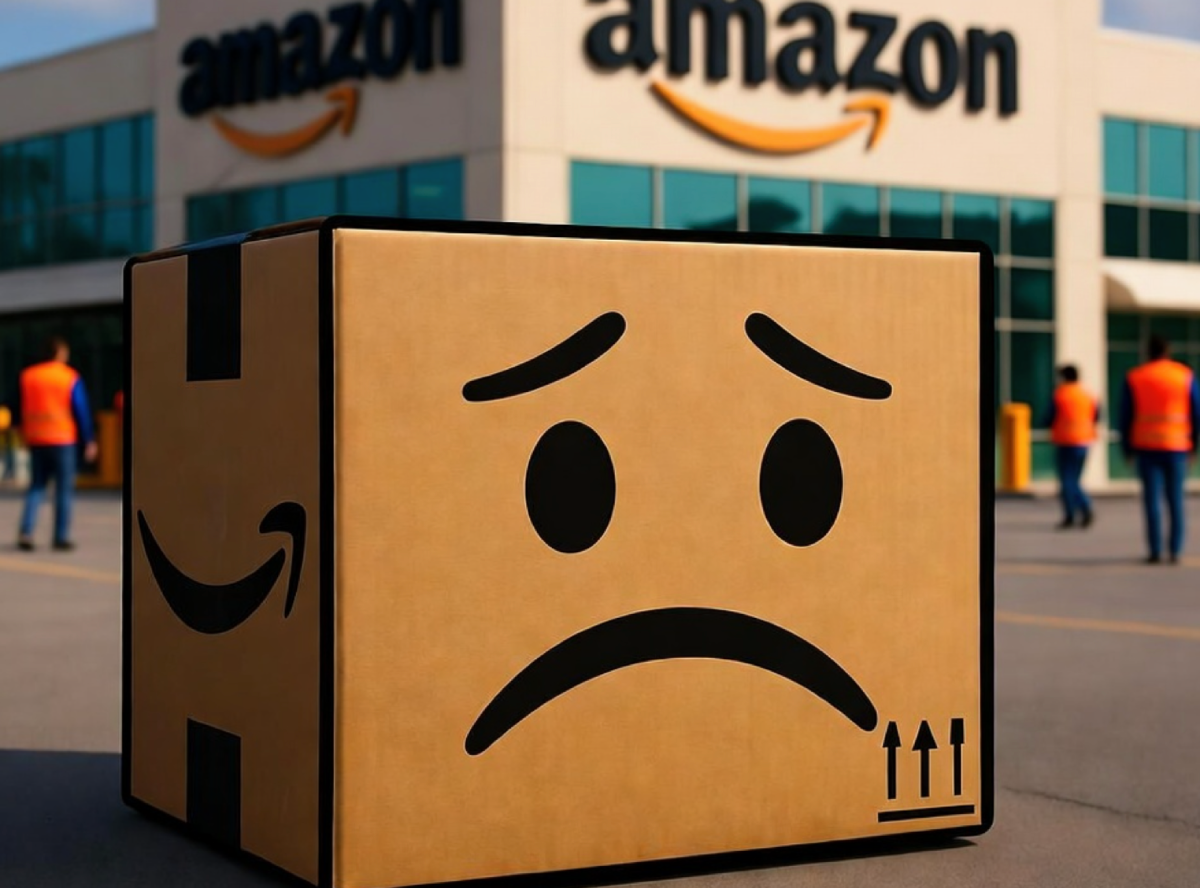
IIn a move that underscores the volatile nature of the tech industry’s post-pandemic recovery, Amazon cut 14,000 corporate jobs early Tuesday, Oct. 28 as part of a broader restructuring effort aimed at reallocating resources toward artificial intelligence initiatives.
The layoffs, set to begin immediately, represent about 4% of the e-commerce giant’s corporate workforce and could eventually reach up to 30,000 positions nationwide, according to company insiders and reports.
Amazon Begins Massive Layoffs
While the cuts primarily target white-collar roles in areas like human resources, product management, and corporate operations—far removed from Amazon’s sprawling warehouse floors—the news has sent ripples through Louisiana’s burgeoning logistics and tech sectors.
The state, home to several Amazon fulfillment centers and a recently opened same-day delivery hub in Jefferson Parish, is left grappling with questions about long-term job security in an economy increasingly tethered to Big Tech.
How Louisiana’s Workforce Will Be Affected
Amazon’s footprint in Louisiana has expanded rapidly in recent years, employing thousands in roles that blend manual labor with emerging automation technologies.
The company’s newest facility in Shreveport, a state-of-the-art fulfillment center powered by AI and robotics, opened its doors just last year and is designed to handle 10 times more automated processes than traditional sites.
Closer to home, the September launch of Louisiana’s first same-day delivery site in Jefferson Parish—a 150,000-square-foot operation—promised quicker service for New Orleans-area customers while creating hundreds of local jobs in sorting, packaging, and delivery.
Across the state, Amazon operates four fulfillment and sortation centers, six delivery stations, and seven Whole Foods locations, making it one of the largest private employers in the logistics space.
But as Amazon doubles down on AI-driven efficiencies—CEO Andy Jassy has cited “overhiring” during the COVID-19 boom as a key factor in the cuts—local economists warn that the company’s belt-tightening could foreshadow challenges for Louisiana workers.
“We’re seeing a national trend where tech giants are pruning corporate overhead to fuel innovation, but that innovation often means fewer human jobs down the line,” said Dr. Marcus Thibodeaux, an associate professor of economics at Tulane University. “In Louisiana, where Amazon’s growth has been a bright spot for blue-collar employment, this could erode confidence and slow recruitment in related fields like supply chain management and data analytics.”
The broader implications for the Bayou State’s workforce are multifaceted. Louisiana’s unemployment rate hovered around 4.2% in September 2025, buoyed by investments in ports, energy, and e-commerce infrastructure.
However, the tech sector—now employing over 50,000 statewide—has faced its own turbulence this year, with layoffs at firms like Intel and broader economic headwinds from federal policy shifts.
For New Orleans, a city rebuilding its economy post-Hurricane Ida and navigating tourism fluctuations, the loss of even indirect jobs tied to Amazon’s ecosystem could strain social services and housing markets.
Local workforce advocates are already mobilizing. “Many of our members in logistics are Amazon-dependent, and while these cuts aren’t hitting warehouses yet, the uncertainty is real,” said Tanya LeBlanc, executive director of the Louisiana Logistics Association. “We’re urging state leaders to diversify training programs—think AI literacy and renewable energy logistics—to shield workers from these shocks.”
Amazon has not specified how many Louisiana-based positions might be affected, but job listings on the company’s site show a heavy emphasis on operational roles in Shreveport and Baton Rouge, with fewer corporate openings in the state.
A spokesperson for the company emphasized in a statement that “these difficult decisions will allow us to invest in high-growth areas like AI and customer experience, ultimately creating more opportunities in the long term.”
Final Word
As Baton Rouge lawmakers convene next month for the legislative session, expect calls for incentives to attract stable tech employers and bolster workforce retraining.
For now, Louisiana workers—from Jefferson Parish sorters to Shreveport robotics technicians—are watching closely, wondering if Amazon’s efficiency drive will deliver prosperity or just more pink slips.
Amazon’s cuts, while painful, underscore a national pivot: Upskilling in machine learning and data science could be the ticket to weathering the storm.
NolaFi.com is your go-to source for employment trends, career advice, and economic insights in the Pelican State. Stay tuned for updates as this story develops.
More Articles Like This: